
REPORT ON VISIT TO BLOOD BANK
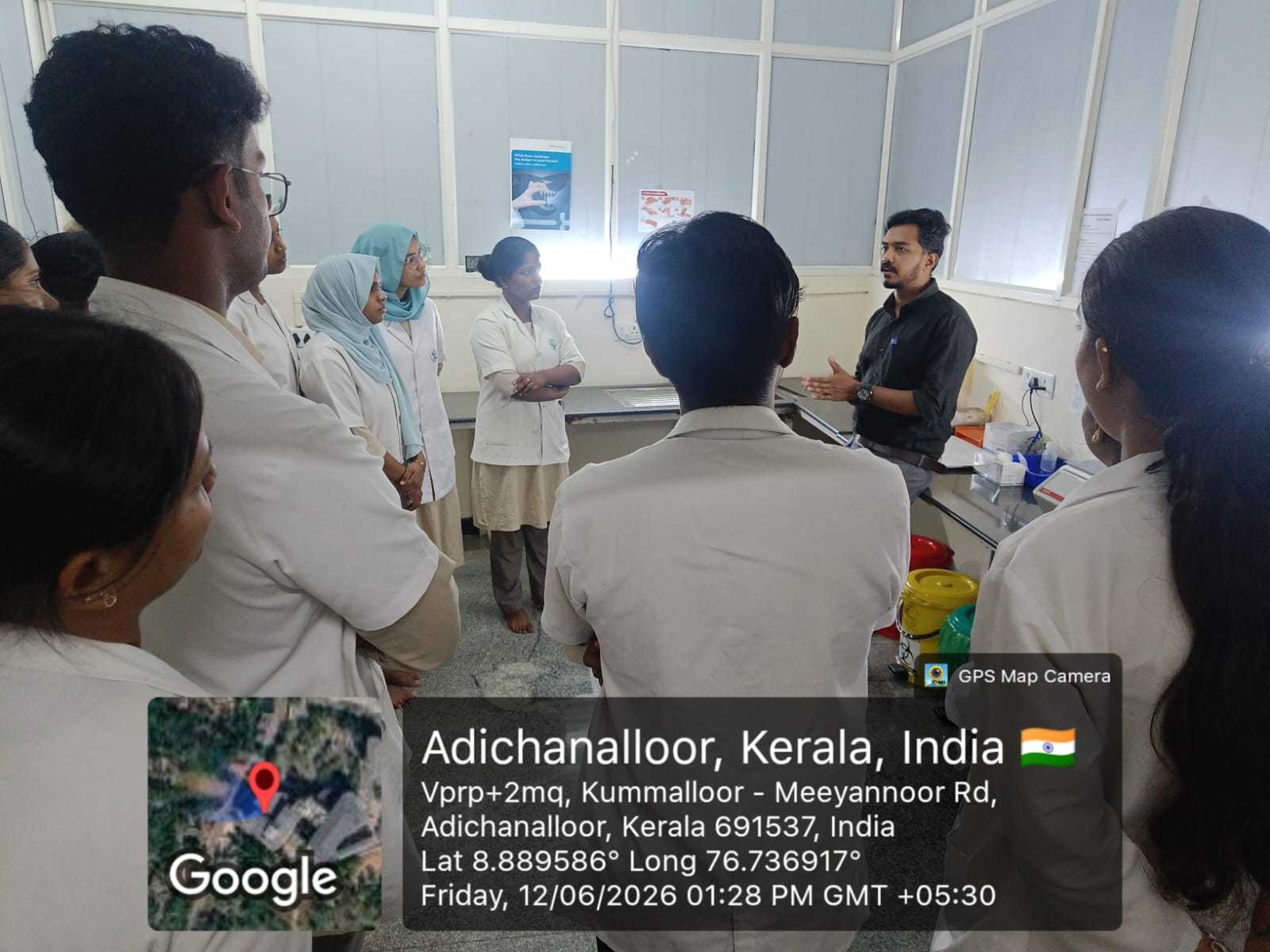
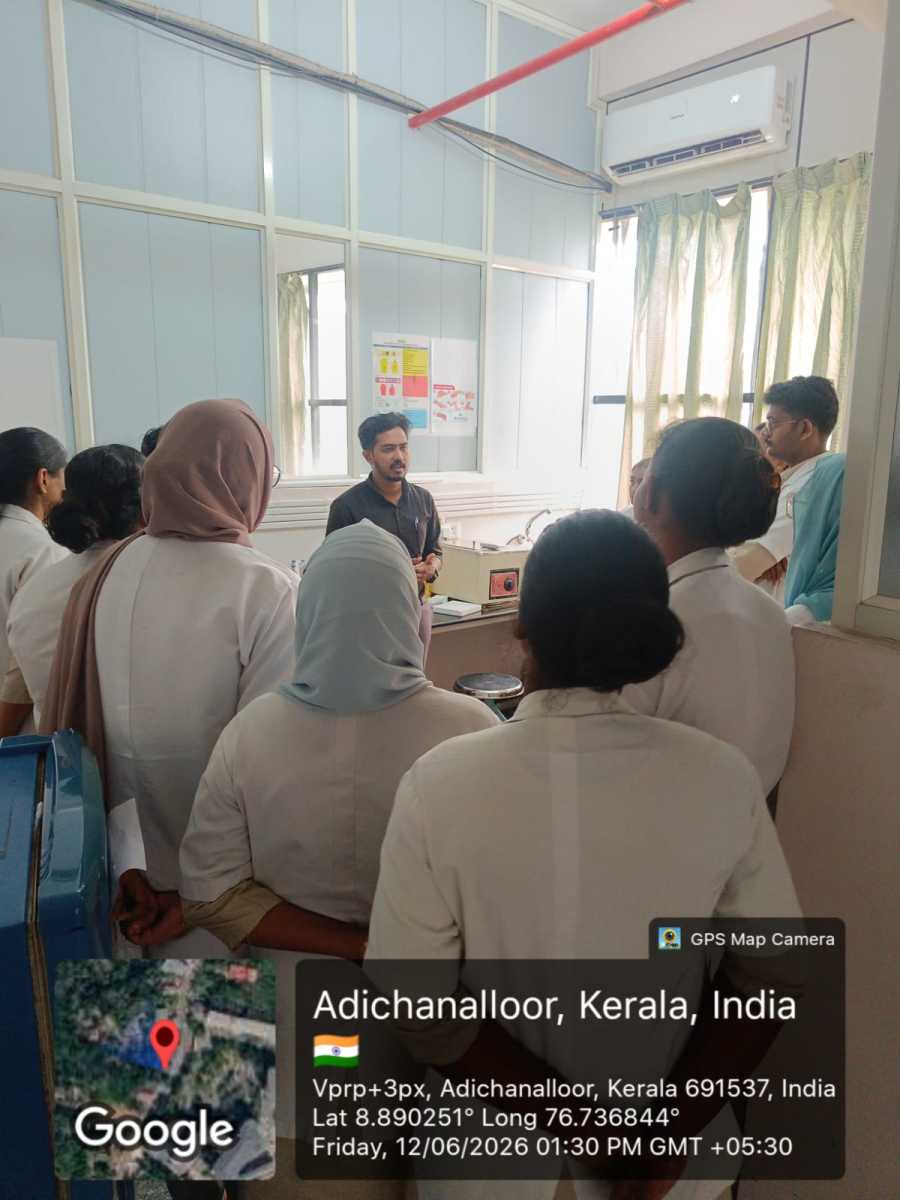
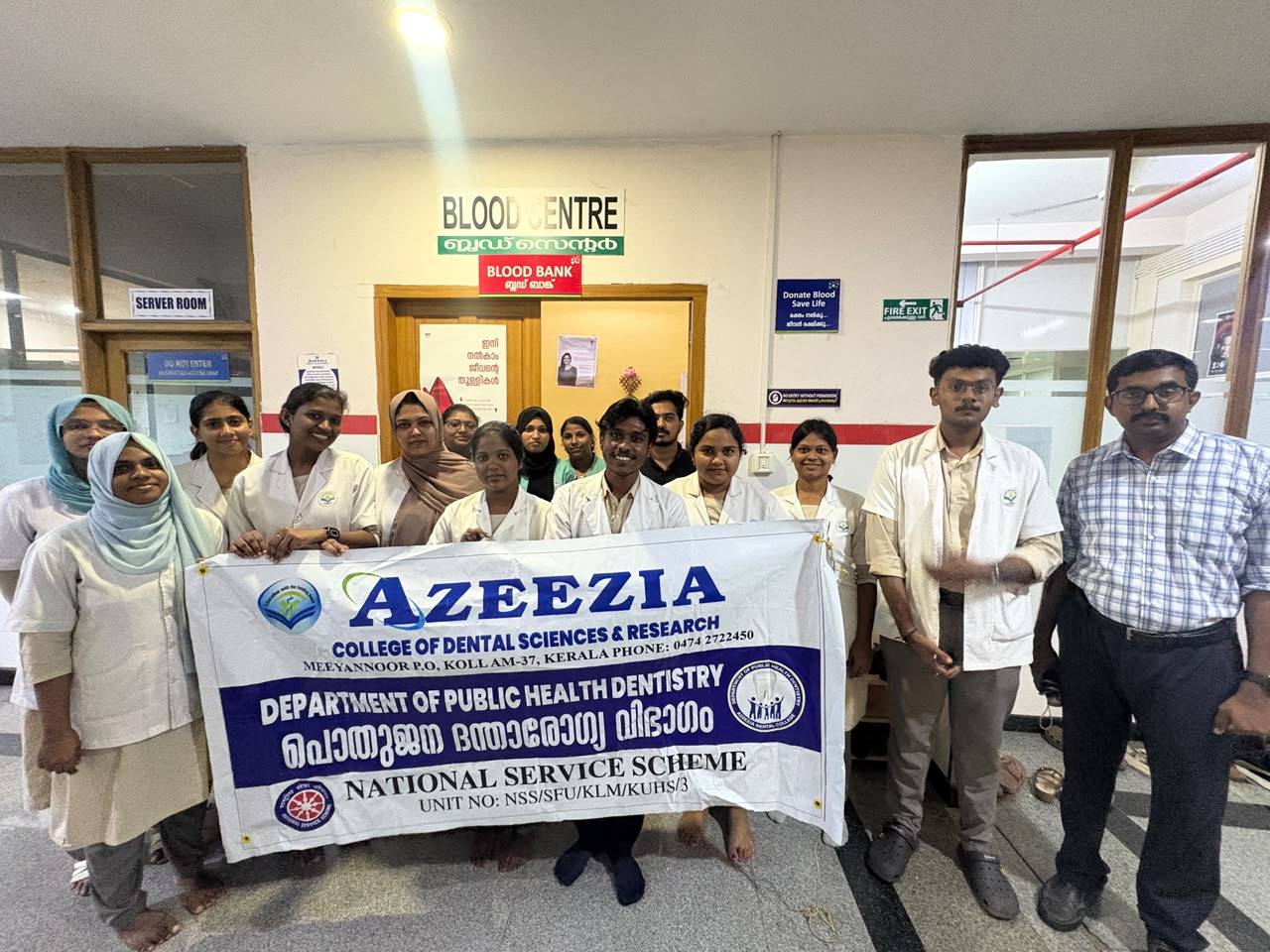
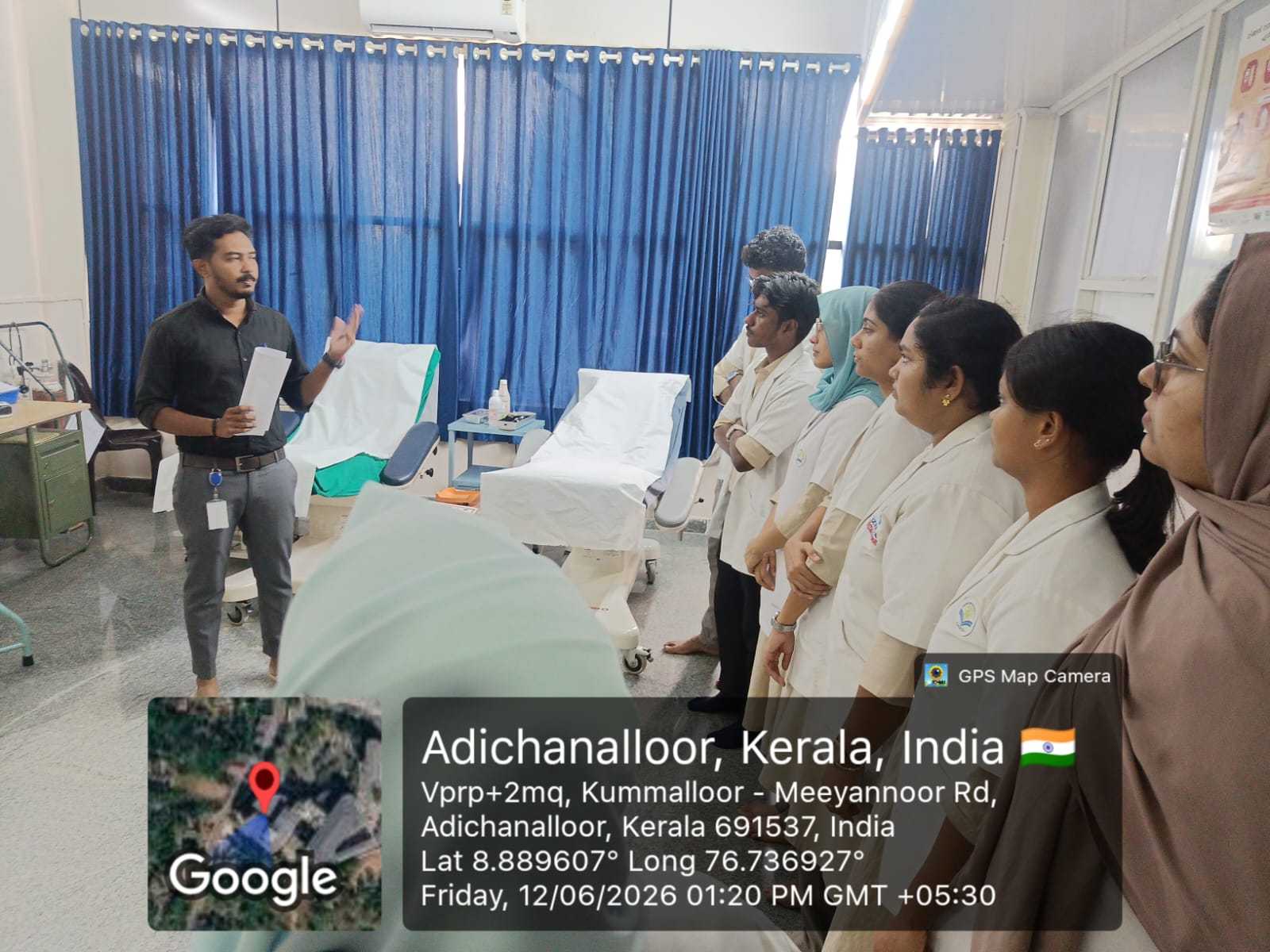
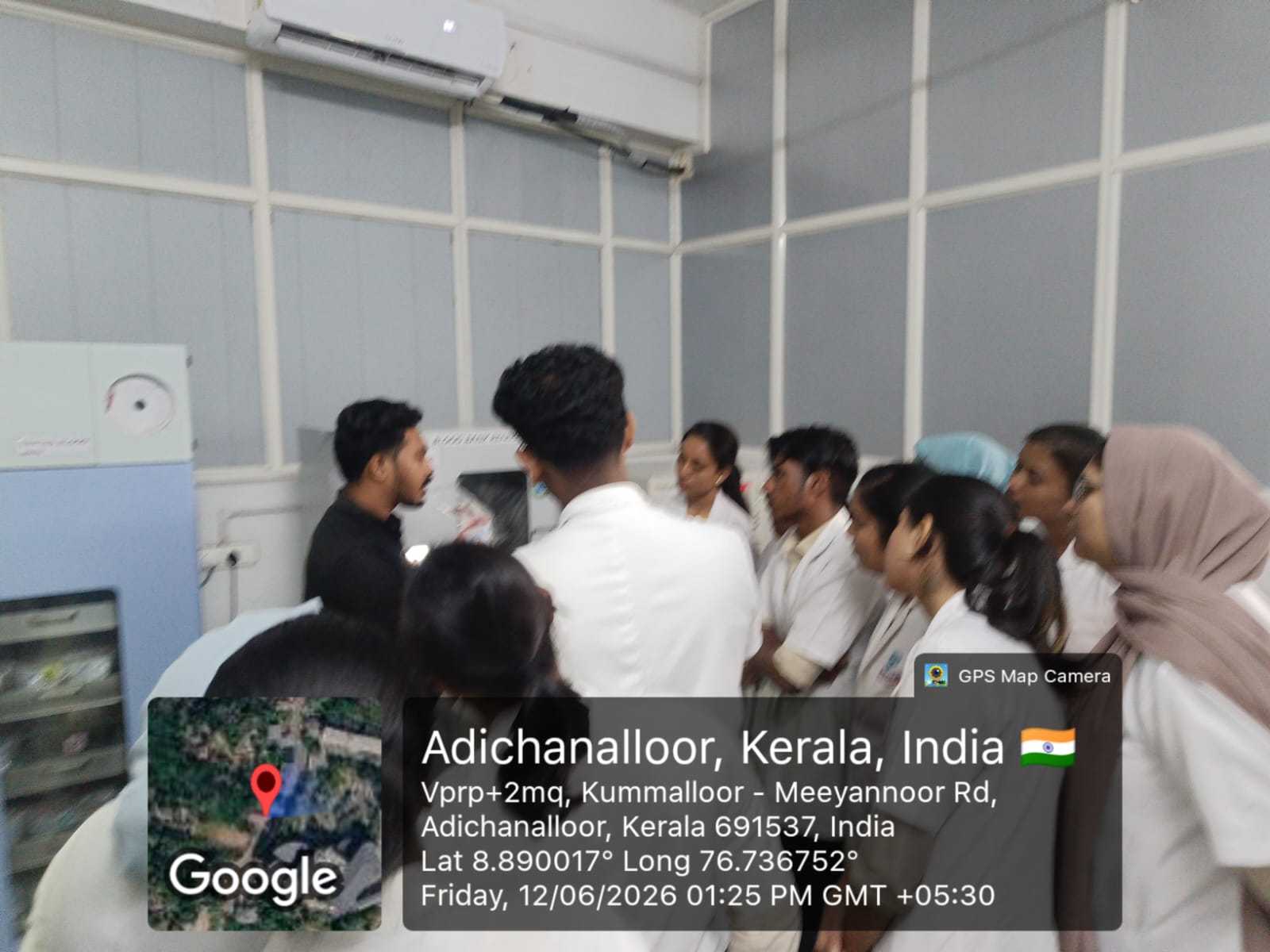
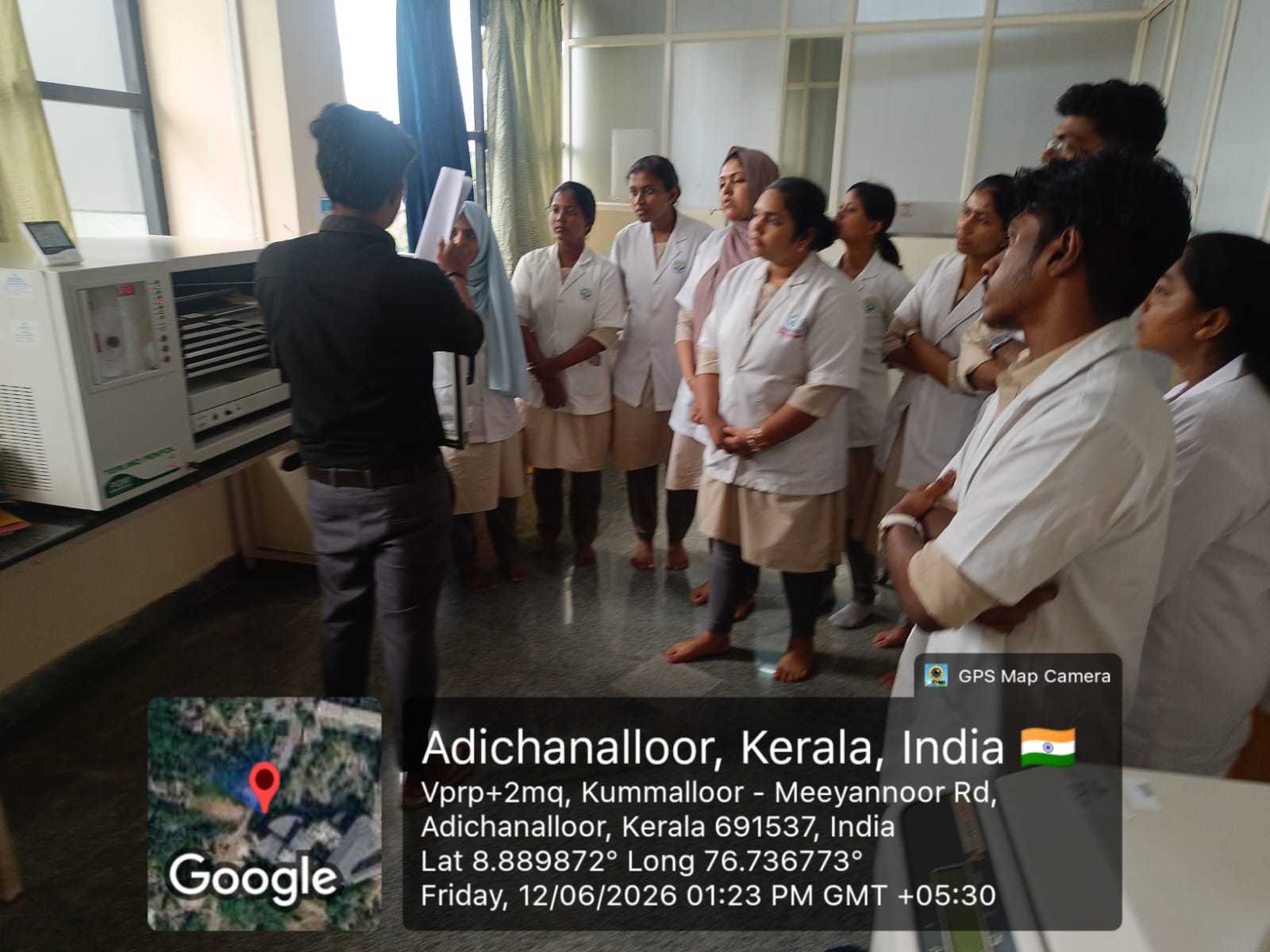
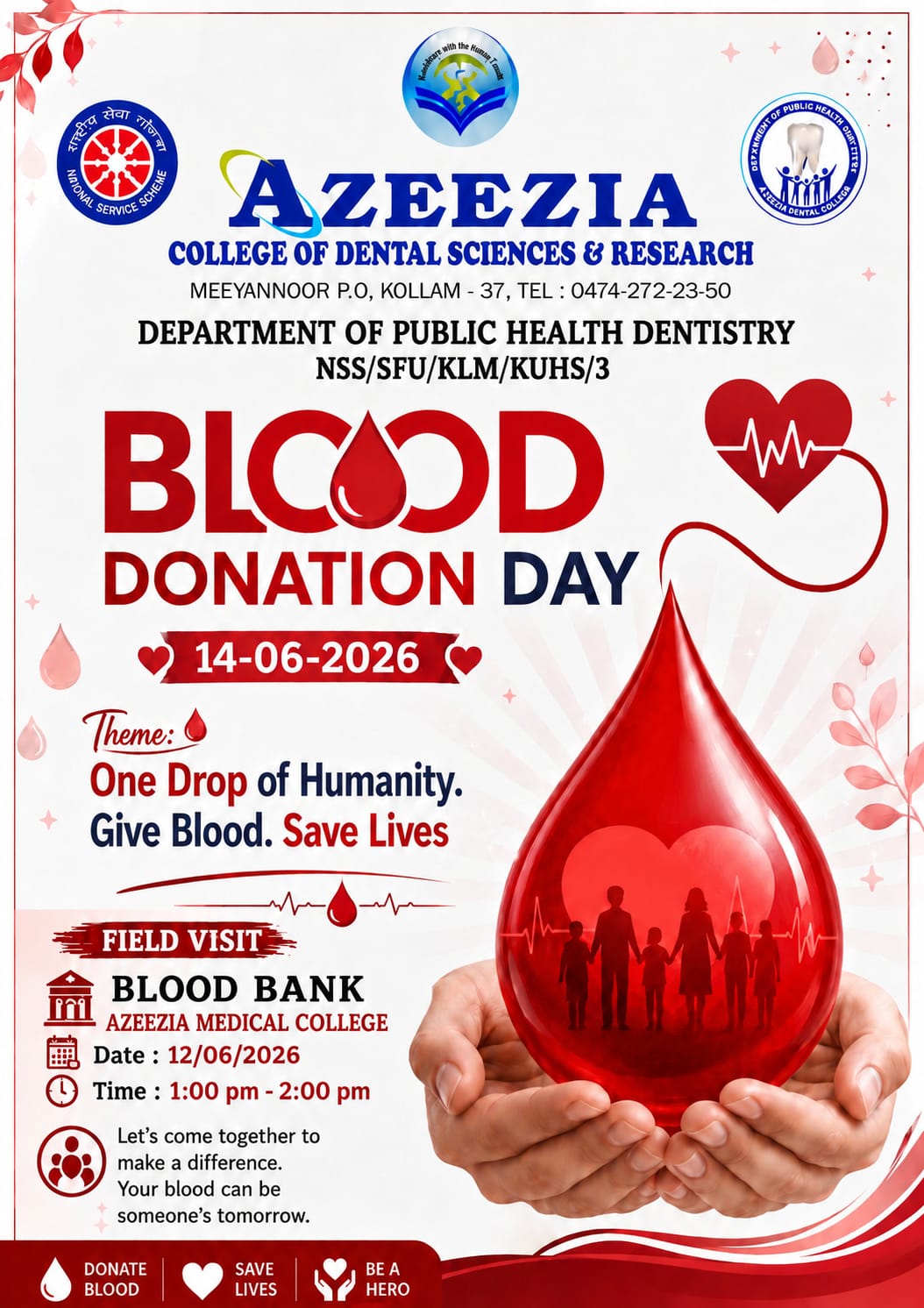
As a part of World Blood Donors Day(June 14th 2026) the Department of Public Health Dentistry, Azeezia College of Dental Science and Research and NSS unit(NSS/SFU/KLM/KUHS/3) organized a visit to Blood Bank, Azeezia Medical College at 1:00 pm. The field visit enabled us to understand the process involving blood donation, its indications and contraindications of donating blood. In the blood bank, the staff-in-charge guided us through the entire procedure. He gave us a consent form and provided us with knowledge about the guidelines in the form and the necessary conditions to be followed before donating blood.
The following are the compartments of the blood bank: Donation room, Storage room, Separating room, Cross matching and blood grouping room and Transfusion Transmitted Infection (TTI) room. First we entered the donation room. We were provided knowledge about the donor criteria for donating blood.
The criteria involved: No addictions to smoking, alcohol and drugs, Weight must be 50 kg and above (both male and female), No malignant diseases, No blood-borne diseases and No sexually transmitted diseases. Proper counseling was given to the donor before taking blood. There were 3 bags for the storage of blood: Single bag, Double bag and Triple bag. The Single bag contains one main bag used to collect, preserve and transfuse whole human blood. The Double bag is used to separate whole blood into red blood cells and plasma and the triple bag is used to separate whole blood into 3 components: Red blood cells, Plasma and Platelets. These bags store blood components like plasma, RBC and platelets. The blood initially collected (whole blood) contains all the components. The components are later separated using different methods. Serological tests and blood group detection tests are done. These blood bags are stored in the refrigerator. Blood is stored at 4°C. Plasma is stored at –40°C to –80°C. Each bag has a label containing a serial number, blood group, Rh group and serological test results. The Storage period for Platelets was 5 days, plasma was 1 year and RBC was 35 days. A component called SAGM (Saline Adenine Glucose Mannitol) is used to extend the shelf life of a triple bag.
At the separating room, three different machines are used: Centrifuging machine, Platelet agitator, Plasma expressor / plasma extractor. Blood is centrifuged at low and high speed using a centrifuging machine. Platelet agitator stores platelets in constant motion to prevent clumping. Sterilization using UV light and separation of plasma from blood is done using a plasma expressor. At the cross-matching and blood grouping room, the recipient and donor blood are cross-matched to check compatibility. A positive result indicates incompatibility and a negative result indicates compatibility.At the Transfusion Transmitted Infection (TTI) room, serological tests to detect blood-borne diseases are done. ELISA is the preferred method. Microtiter plates, well washer and reader are the equipment used. It is done to prevent spread of infectious diseases from donors to transfusion recipients. Blood is tested for pathogens like HIV, Hepatitis B, Hepatitis C, Syphilis and Malaria. A very informative session regarding the process, indications and contraindications of blood donation was carried out in an easy and understandable manner. We also acquired knowledge about the criteria for donating blood. We also understood the process involving the separation of different constituents of blood and their storage.