

FIELD VISIT AT WATER TREATMENT PLANT AND SEWAGE TREATMENT PLANT
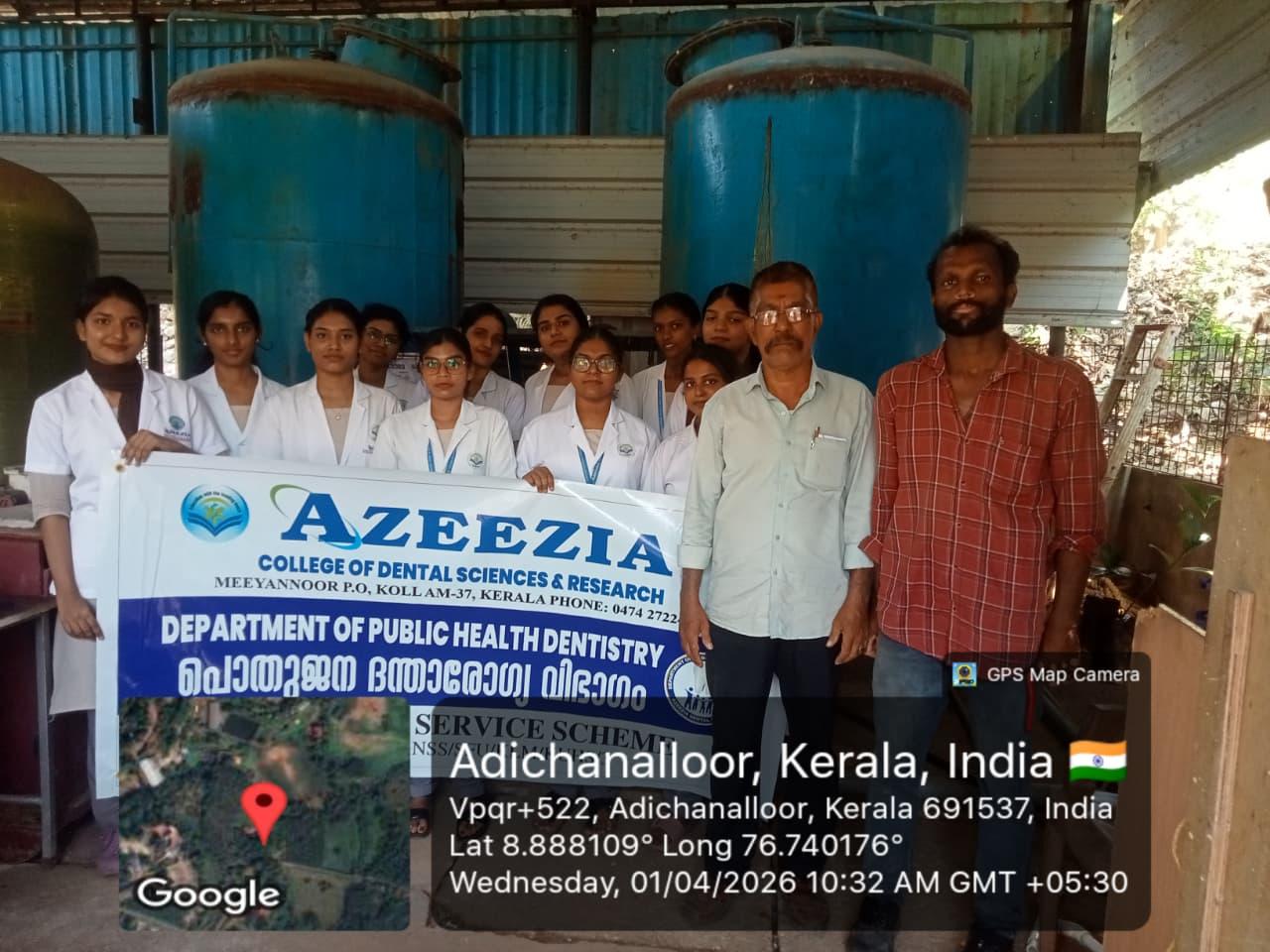
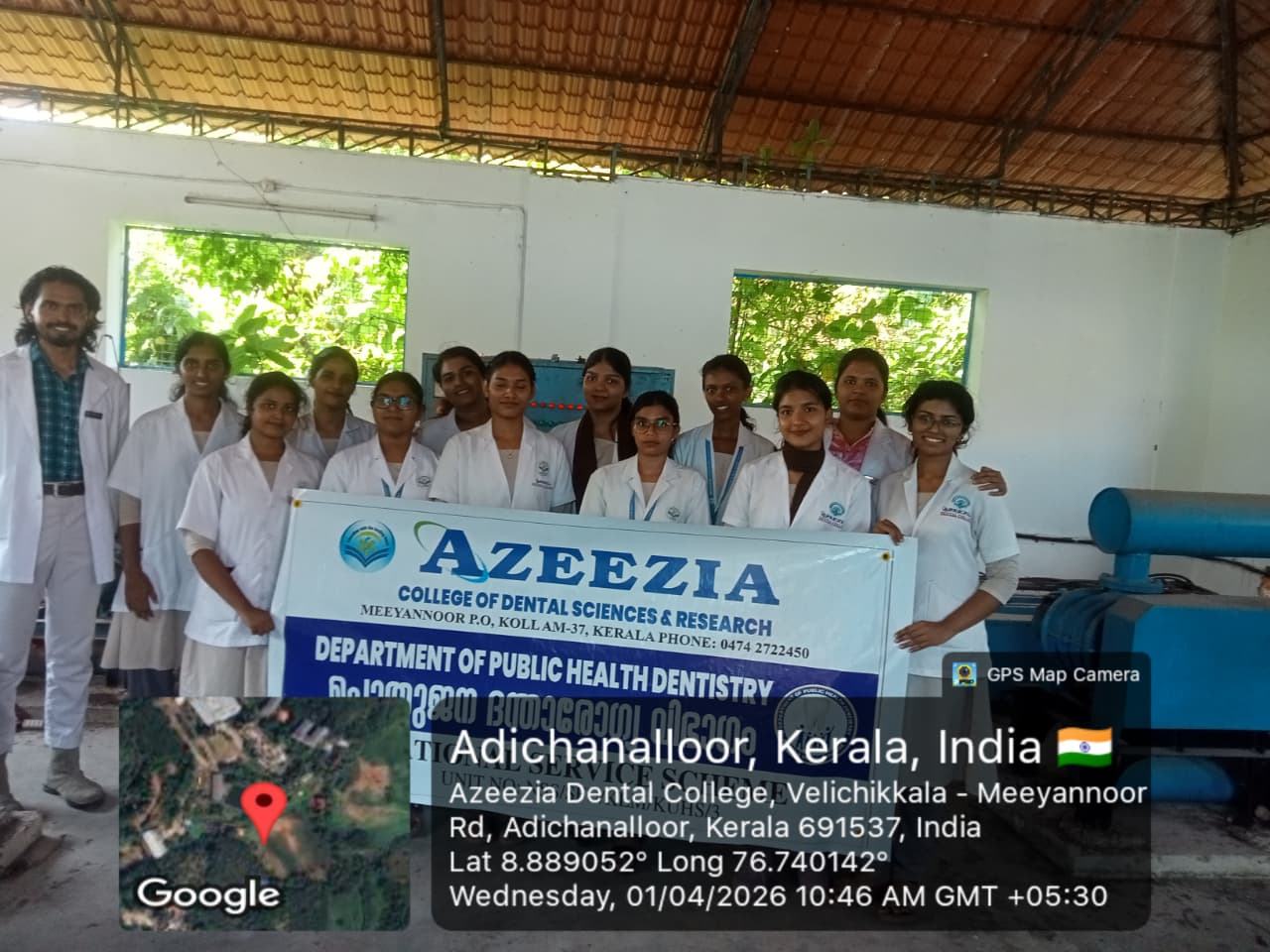
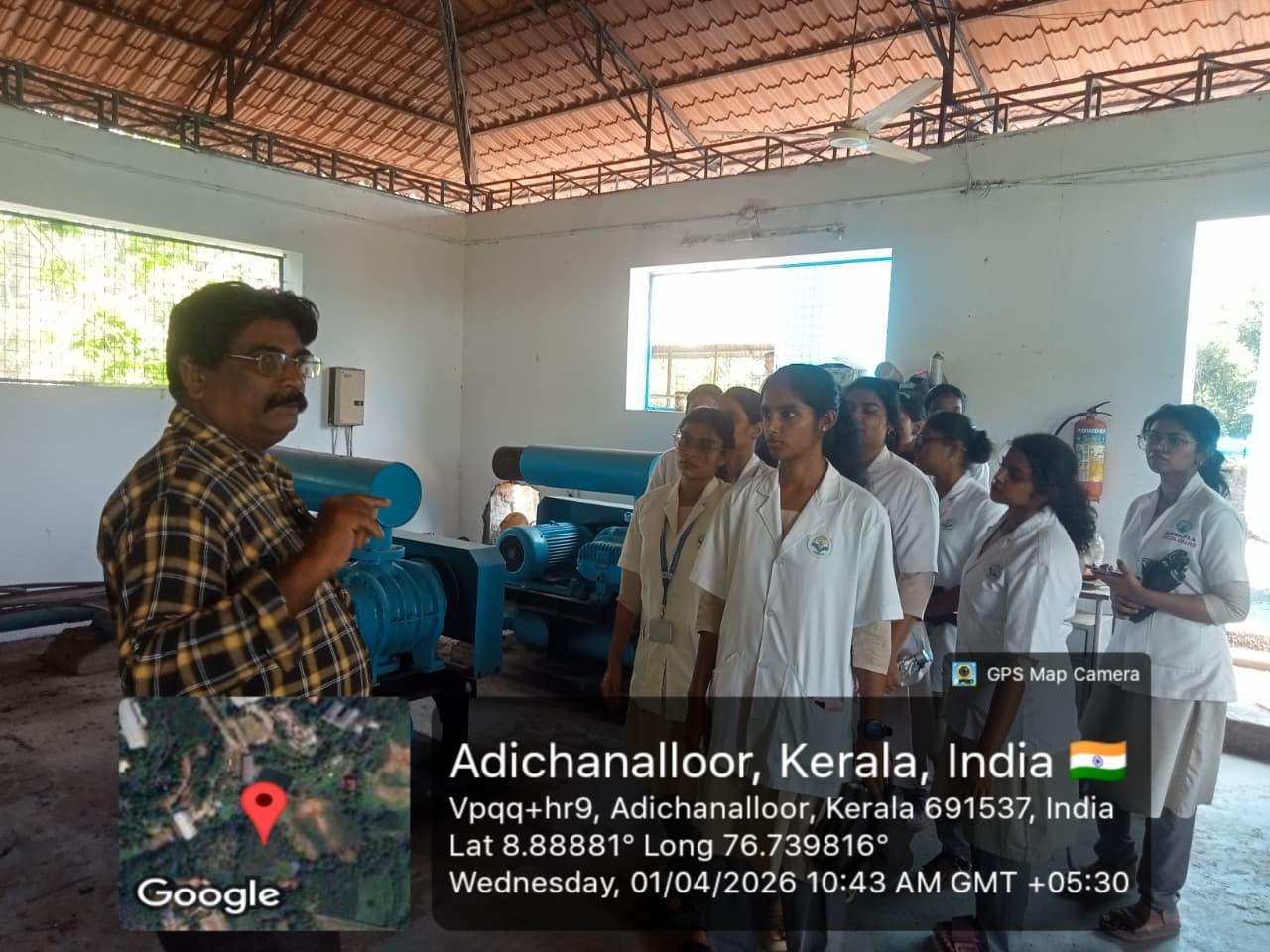
The Department Of Public Health Dentistry, Azeezia College of Dental Science and Research and NSS unit NSS/SFU/KLM/KUHS/3 conducted a field visit for the final year Part A students to the waste Treatment Plant and sewage Treatment Plant, Azeezia College of Medical Science and Research on 01/04/2026 as a past of World, Water Day.The Word Water Day is held annually on March 22 to advocate for the sustainable management of fresh waterresources and to raise awareness for the people currently living without access to safe water.
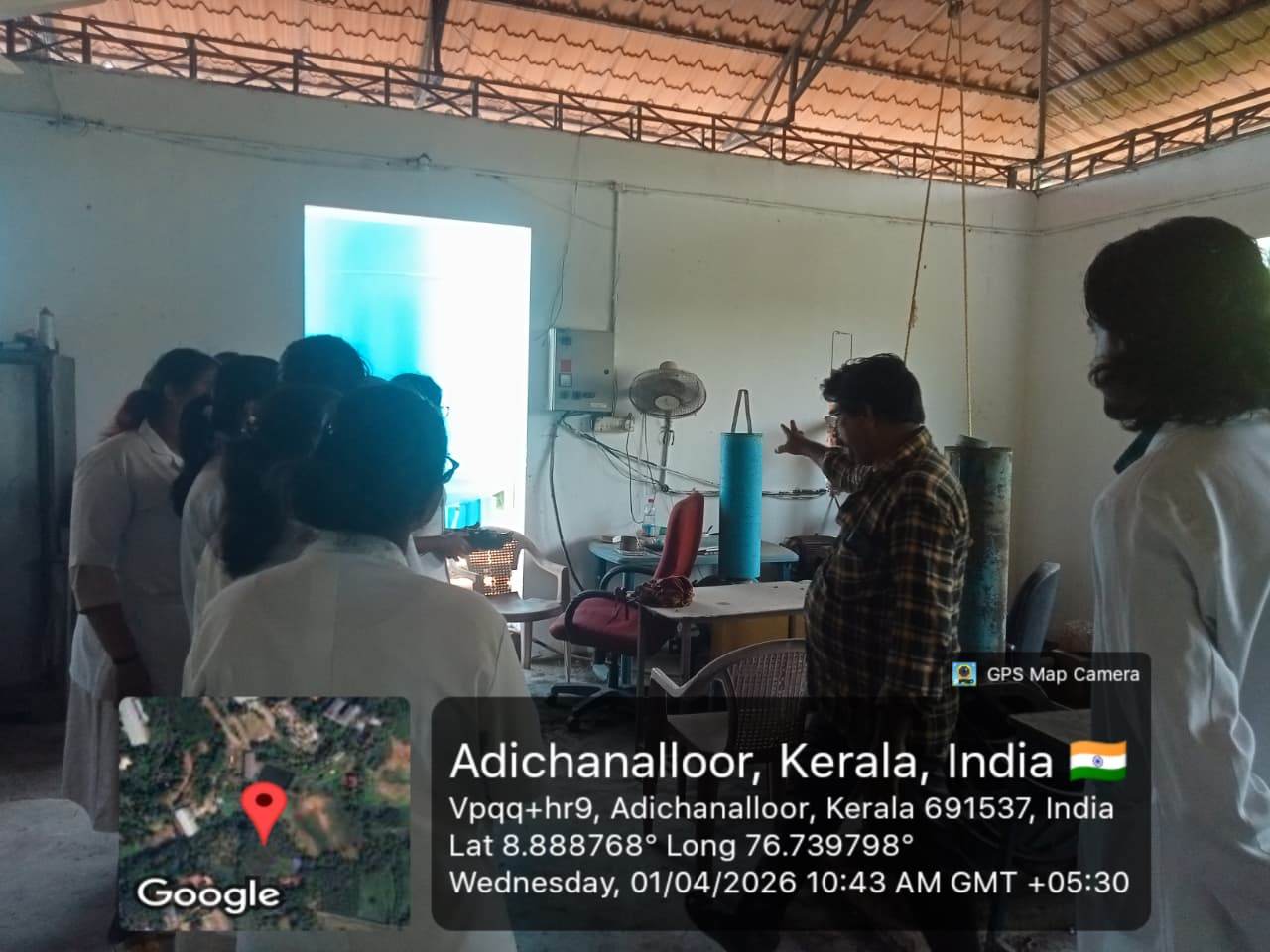
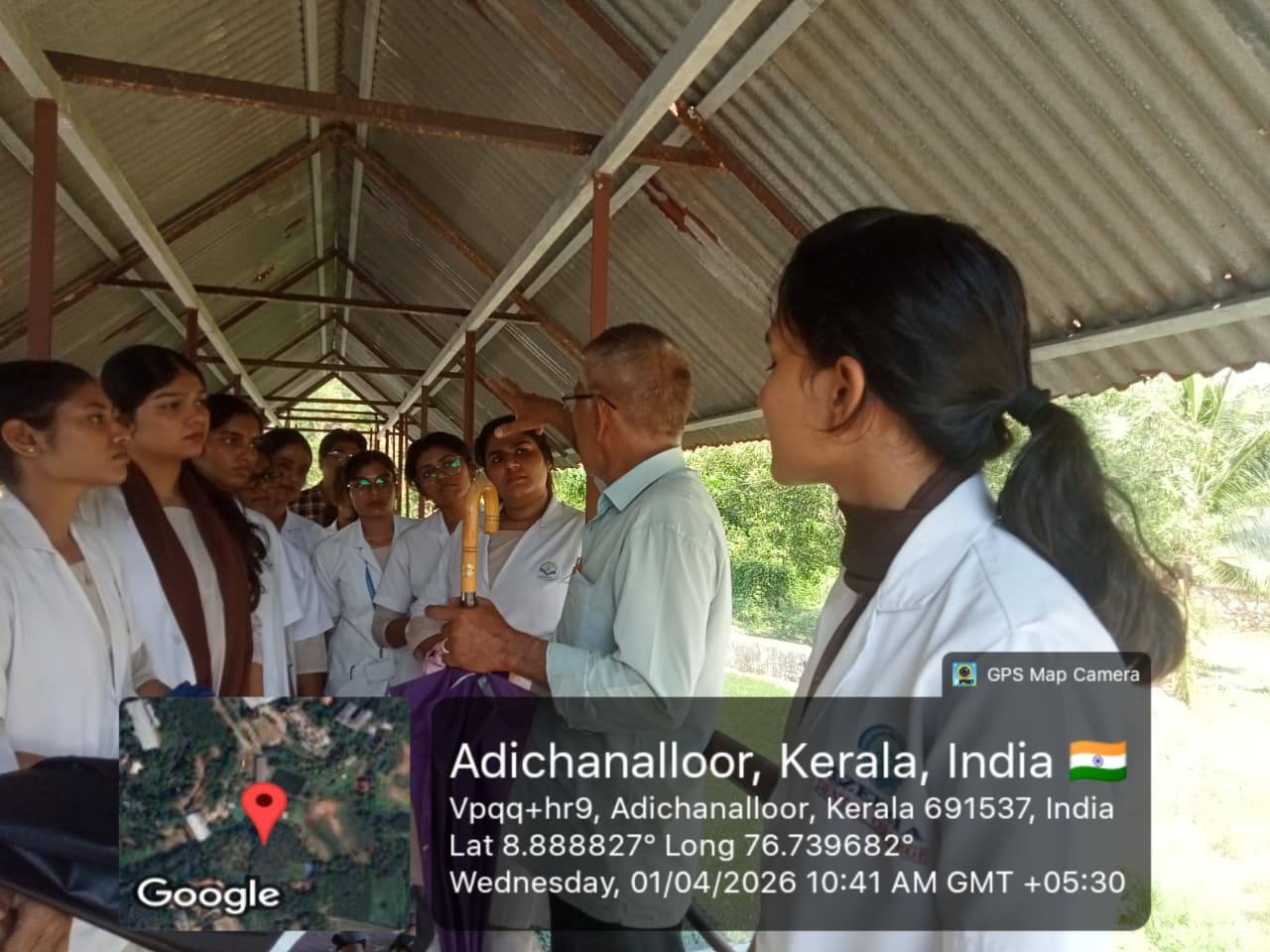
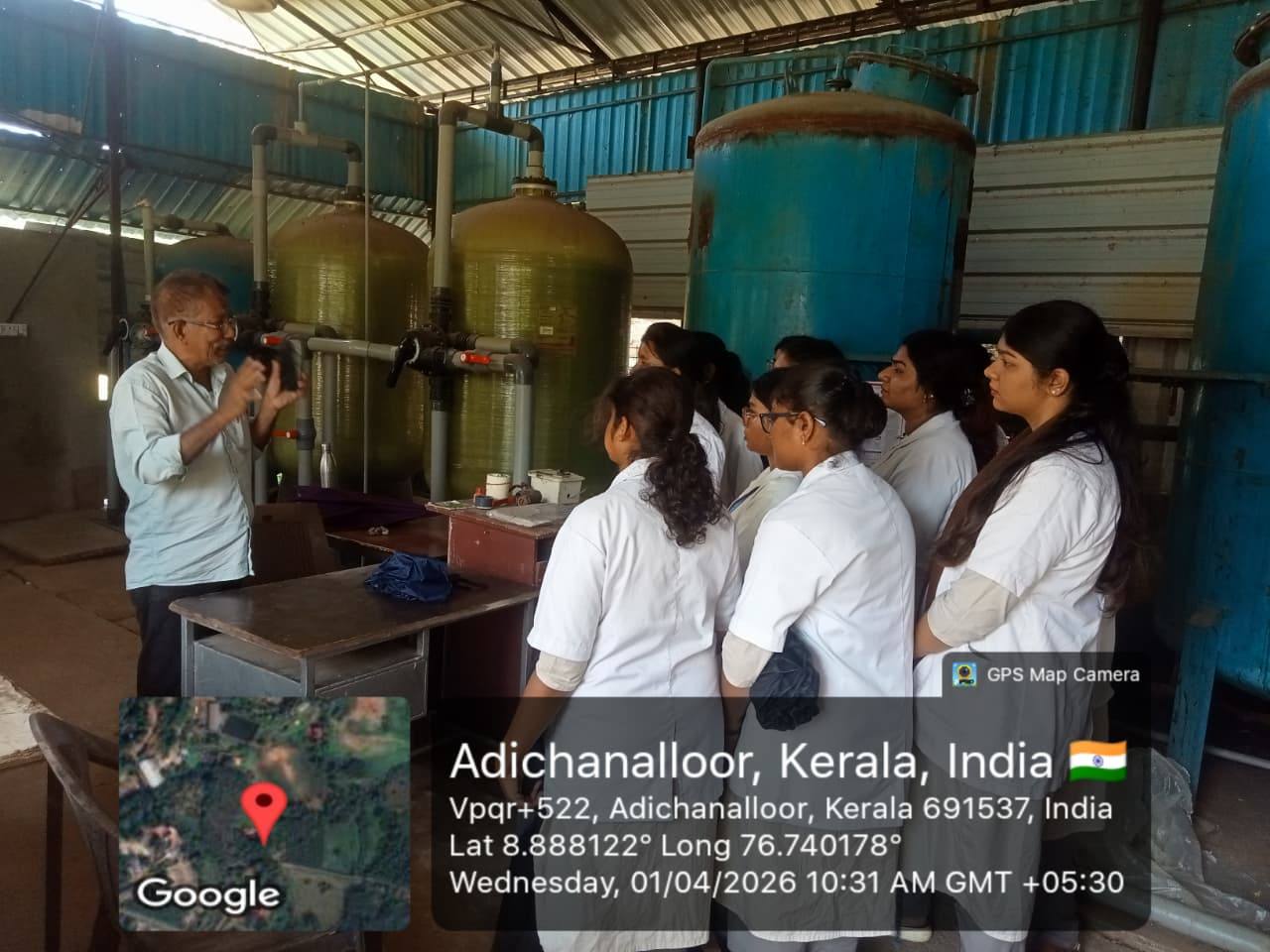
The field Visit commenced at 10:15am. At first we visited the water Treatment Plant and then the Sewage Treatment Plant. The objective of this field visit was to understand the engineering processes and the steps involved is water purification and waste water management. At Water Treatment Plant, the supervisor introduced us to the Water Treatment Plant and explained the processes involved in purification.At first the raw water is collected in a collection tank and kept forsedimentation. The water is collected from the pond. After sedimentation, the water is treated though five tanks which has 3 Lakh litres capacity each, which contains layers of sand, gravel, iron, carbon, charcoaletc. to remove even smallermicroscopic impurities. After filtration, the water is subjected to softening that is ion exchange which reduces hardness of water. The final step is the port treatment and disinfection, here coated after filtration before reaching the storage tank, water is passed through an UV chamber which kills any remaining bacteria or pathogens before the water is pumped for the domestic purposes. Nearly 8 lakhlitres of water is treated daily in the WaterTreatment Plant is the college campus and supplied to the hospital, college, canteen, hosteletc.
After the Water Treatment Plant, we visited the Sewage Treatment Plant. The Sewage Treatment Plant treats waste water used in college so it can safely returned to the environment or released for irrigation purposes. The first step is the preliminary treatment where the used water is collected in a large tank to remove the large objects using metal bars to prevent damage to the pump. Then through a pipe connection the screened water is transferred from the large tank to the rectangular tank which contain a medium of good bacteria that kills the presence of microorganism or pathogens in the water. Next the water flows into another tank where aeration takes place which provide oxygen for good bacteria. These microorganism eat the dissolved organic matter present in the water . The next step is the primary treatment where the water is pumped into a clarifier where the bacteria gets settled at the bottom. Some of the sludge is recycled back to the aeration tank to continue the cycle. Then the treated water is filtered though the sand or carbon filters to remove any tiny remaining particles and then subjected to disinfection. The recycled water is monitored for pH and used for irrigation purpose in the college campus.
The visit concluded at 11:30 am. The field visit was highly informative and helped to understand the value of water and promote its safe usage. While water treatment plant focuses in refining a natural resource for the human use, the sewage treatment plant focuses on neutralising human impact to protect the ecosystem. Proper maintenance of both is essential for public health and environmental sustainability.